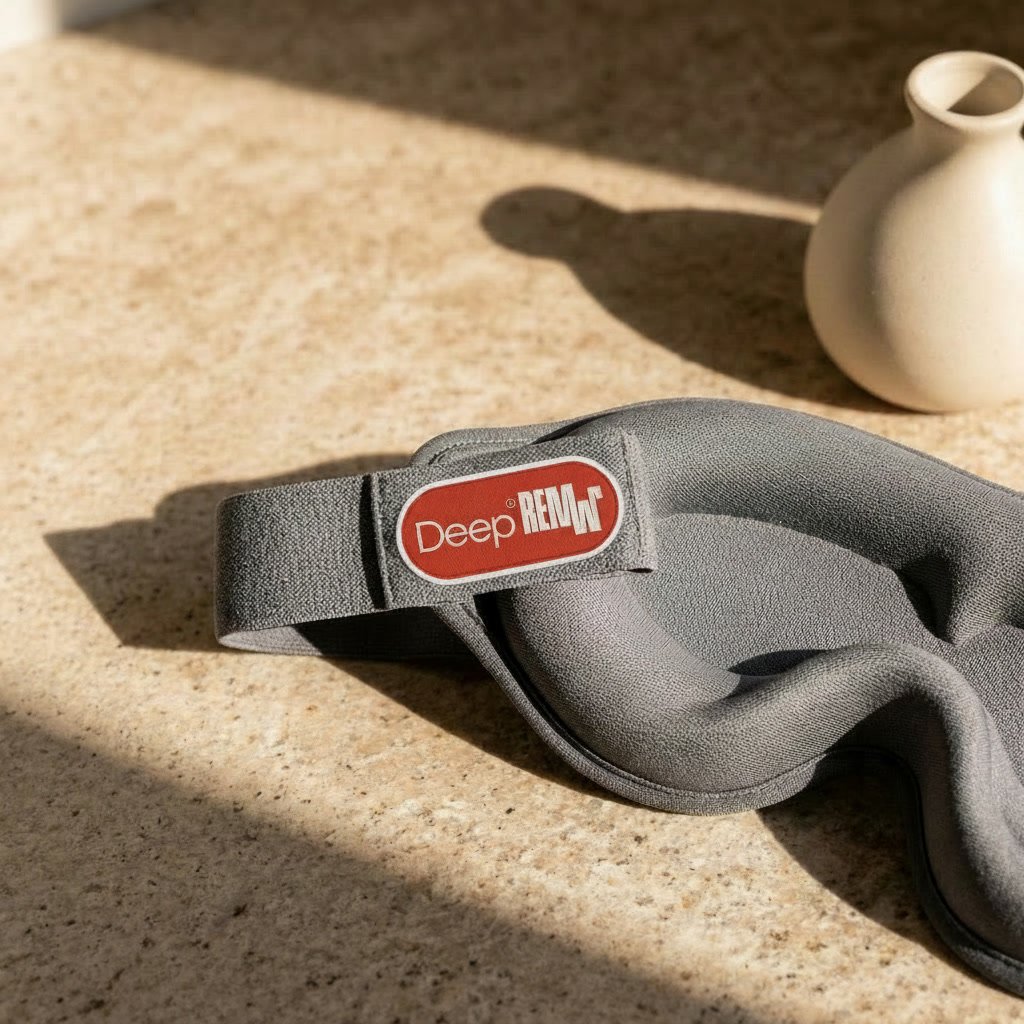
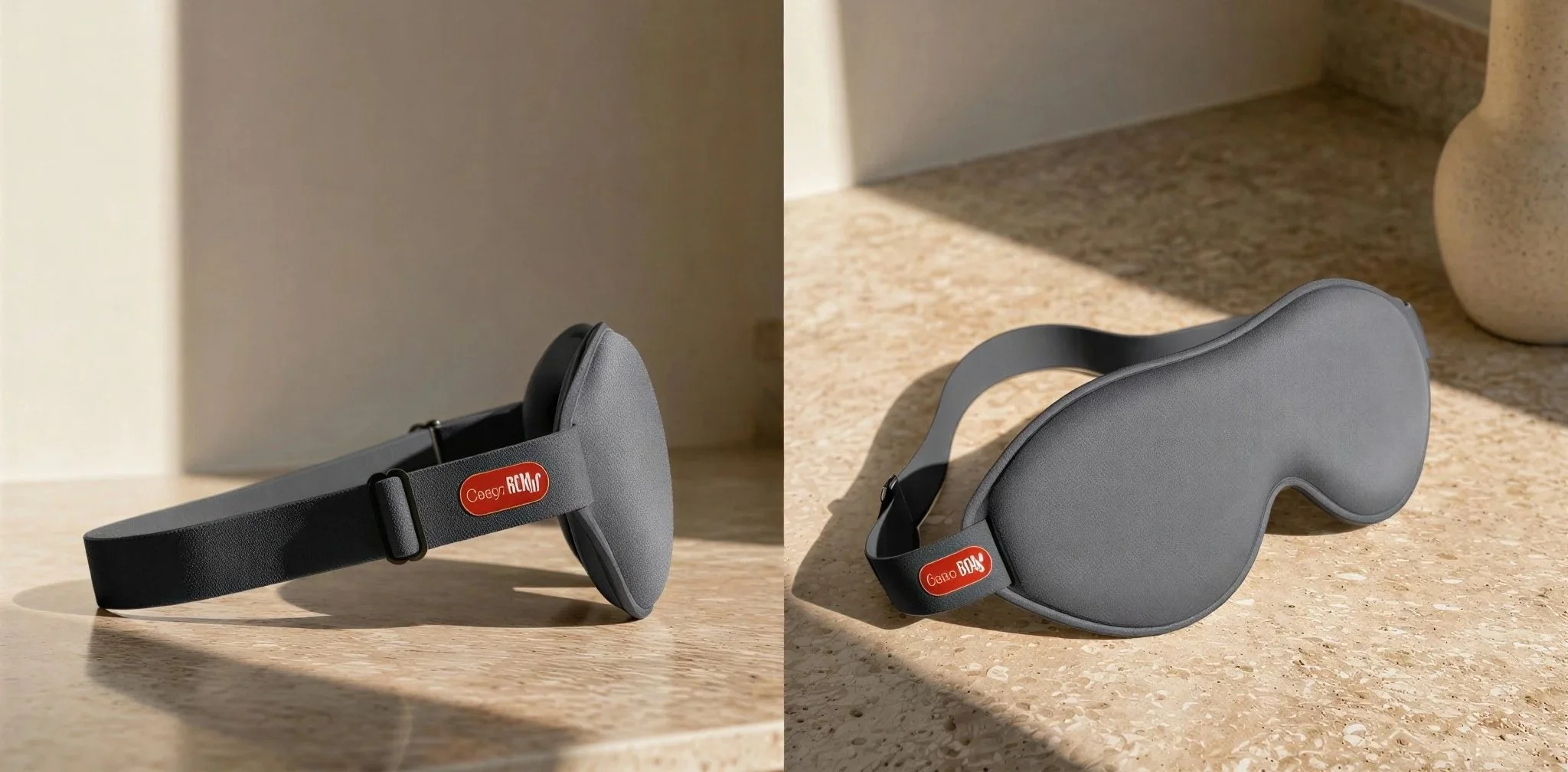
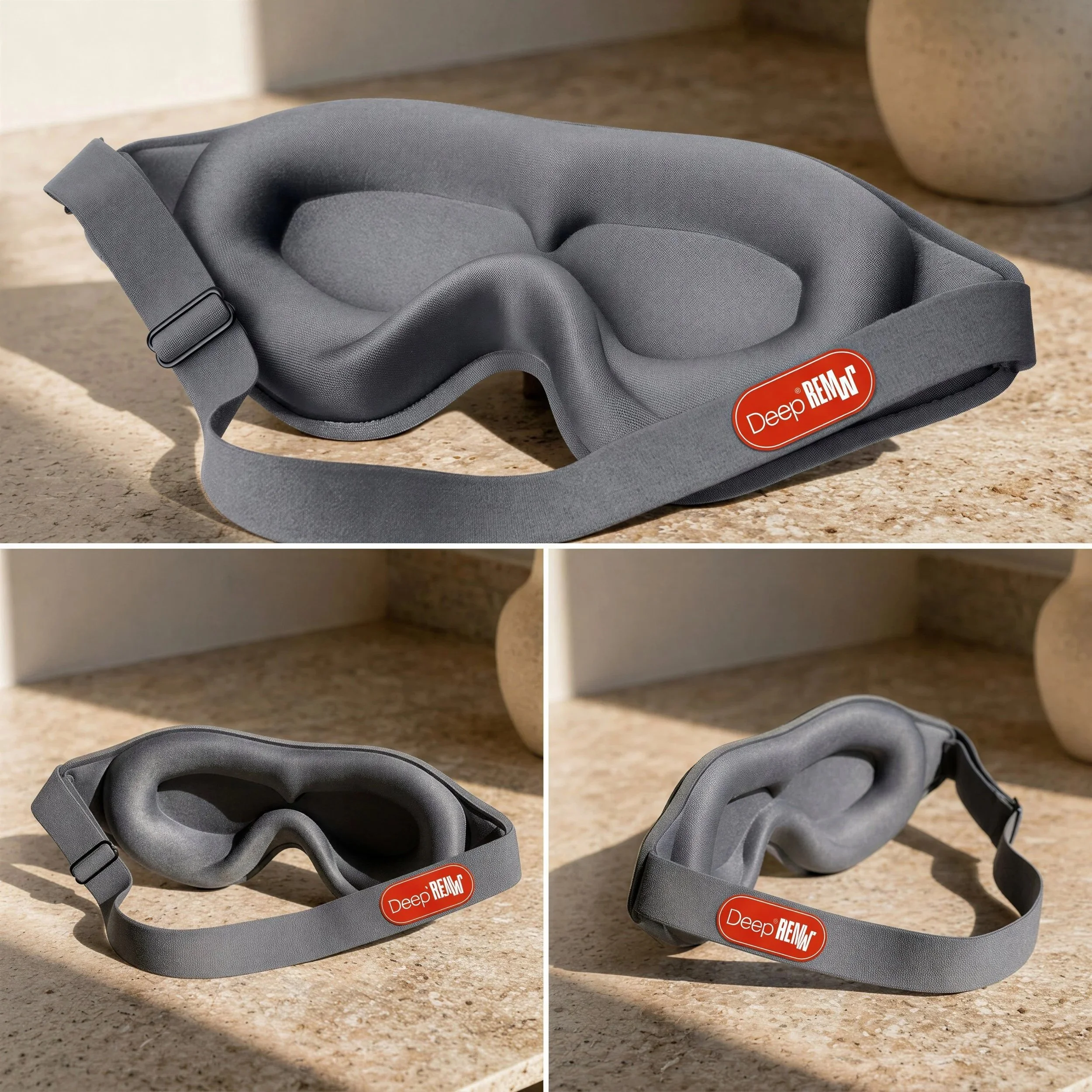
What's included & key features100% blackout — zero light penetration
Contoured design — zero pressure on eyelids. Flat masks press directly on the eyes, which can interrupt REM sleep movement and cause discomfort. The contoured shape creates a blackout chamber without contact — your eyes move freely throughout the night.
Adjustable strap — fits all head sizes. Including side sleepers.
Breathable fabric — no heat, no sweat. Overheating is one of the most common causes of night wakings. The fabric is lightweight and breathable by design, keeping skin temperature stable throughout the night.
Ultralight — ideal for travel
Disconnect from external light, letting your eyes proper rest
Why darkness is non-negotiableYour skin has light-sensitive receptors. Even with your eyes closed, low-level light — a streetlamp, a standby LED, a phone screen across the room — is enough to signal your brain to reduce melatonin production. Total darkness is not a comfort preference. It is a biological requirement for deep, restorative sleep.
The science behind blocking lightEven dim light during sleep suppresses melatonin. Research shows that exposure to as little as 10 lux of light during sleep — roughly the level of a dimly lit room — is enough to reduce melatonin levels and increase alertness measurably. A sleep mask eliminates this variable.
Darkness accelerates sleep onset. The absence of light is one of the primary triggers for the pineal gland to release melatonin. A complete blackout environment tells your circadian system unambiguously: it is time to sleep.
Total darkness protects your REM cycles. Light exposure during the second half of the night — when REM sleep is most concentrated — is particularly disruptive. REM is where emotional regulation, memory consolidation and cognitive recovery happen. Protecting it matters.
Ideal for travel and shift work. Controlling your light environment at home is manageable. On a plane, in a hotel, or sleeping during the day, it is not. A sleep mask makes your circadian system portable.
Caring TipsWashing: Hand wash in cold or lukewarm water with a gentle, fragrance-free soap. Avoid hot water — it can shrink the fabric and degrade the elastic over time. Do not tumble dry, iron or bleach. Lay flat or hang to air dry completely before using again.
For a quick refresh between washes, a gentle wipe with a damp cloth is enough to remove surface oils and dust.
How often to wash: With nightly use, wash your sleep mask once a week. Skin oils, sweat, and product residue build up faster than you'd expect — and you're wearing this directly against your eyes and face for 7 to 9 hours a night.
Storage: Keep it in a dry, dust-free place when not in use. The travel pouch (if included) is ideal — it protects the fabric and keeps the strap from stretching out of shape.
When to replace it: With proper care, your sleep mask should last 6 to 12 months with nightly use. Replace it when you notice:
— The fabric has thinned or pilled noticeably
— The elastic strap has lost tension and no longer holds a secure, comfortable fit
— The contoured shape has flattened and no longer creates a proper blackout seal
— Persistent odour after washingOne simple rule: If light is getting through, it's time for a new one. The whole point is total darkness — a worn-out mask defeats the purpose.